The Resource Hub.
An authoritative library of tools, frameworks, and strategic intelligence for scaling operations efficiently.
Prompting & AI Fundamentals
DeepLearning.AI
ChatGPT Prompt Engineering for Developers
Learn prompt engineering best practices from Andrew Ng and OpenAI. Covers summarisation, few-shot prompting, and building AI-powered apps.
Learn Prompting
The Complete Prompting Guide
A comprehensive open-source guide to prompting — from basics to advanced techniques like chain-of-thought and ReAct prompting.
Coursera · Andrew Ng
Generative AI for Everyone
A non-technical introduction to generative AI — what it is, how it works, and how to apply it in your work. No coding required.
AI for Business & Marketing
HubSpot Academy
AI for Marketers
How to use AI to improve marketing campaigns, write better copy, and automate repetitive tasks. Practical and business-focused.
AI Fundamentals (Google)
Google's official free courses on AI fundamentals, machine learning basics, and responsible AI. Great foundation for business owners.
LinkedIn Learning
AI for Business Professionals
A curated library of AI courses for professionals — covering productivity, leadership, content, and decision-making with AI tools.
AI for Creators & Content
Skillshare
AI for Content Creators
Courses on using Midjourney, ChatGPT, and AI video tools for creators. Practical and project-based — taught by working creators.
Udemy
ChatGPT & AI Masterclasses
Hundreds of community-taught courses on ChatGPT, Midjourney, automation, and AI for business. Often on sale for under $15.
YouTube · Matt Wolfe
AI News & Tutorials (Free)
One of the best free resources for staying up to date with AI tools. Weekly breakdowns of new tools and how to use them practically.
AI by Role — How to use it in your work
- Write scripts and captions with ChatGPT
- Generate thumbnails and graphics with Midjourney
- Create faceless videos with HeyGen or Pictory
- Repurpose long content into short clips automatically
- Schedule and automate posts with Zapier
- Write product descriptions with Jasper or Copy.ai
- Create product images with Adobe Firefly
- Automate order follow-ups with Make
- Research competitors and keywords with Semrush
- Generate ad copy variations with ChatGPT
- Generate campaign ideas and briefs with Claude
- Optimise blog content for SEO with Surfer SEO
- Create email sequences with Copy.ai
- Build automated lead funnels with Zapier
- Analyse ad performance and write variations
- Validate business ideas with Perplexity and ChatGPT
- Build landing pages with AI-generated copy
- Automate customer support with AI chatbots
- Create pitch decks and business plans with Claude
- Run lean with Make or n8n automating admin tasks
- Generate concept images with Midjourney
- Remove backgrounds and edit images with Canva AI
- Write proposals and client emails with Claude
- Create logo concepts with Ideogram
- Automate invoicing and follow-ups with Zapier
- Build course outlines and lesson plans with ChatGPT
- Create explainer videos with Pictory or HeyGen
- Write newsletters and email content with Jasper
- Design worksheets and PDFs with Canva AI
- Automate student onboarding with Make
- Answer customer questions 24/7 with an AI chatbot
- Write social media posts in bulk with Copy.ai
- Connect your tools with automations via Zapier
- Create marketing images without a designer
- Track competitors and rank better with Ahrefs
- Write, review, and debug code with Claude or ChatGPT
- Build complex automations with n8n
- Scrape and process web data with Bardeen
- Generate documentation with Notion AI
- Prototype apps and MVPs faster with AI assistance
Not all AI models are equal. Each has different strengths, pricing, and ideal use cases. Here's a plain-English breakdown to help you choose the right one.
Large Language Models — Plain English Comparison
OpenAI's flagship model. Fast, multimodal (text, image, voice), and the most widely integrated AI in the world. Powers ChatGPT.
Anthropic's best everyday model. Exceptional for long documents, nuanced writing, and tasks requiring thoughtful, careful responses.
Google's multimodal AI deeply integrated with Search, Docs, and Gmail. Strong at research and real-time information retrieval.
Europe's leading AI model. Open-weight, privacy-focused, and strong at multilingual tasks. A great alternative to US-based providers.
Meta's open-source model — run it locally or via API, completely free. Powers Meta AI across WhatsApp and Instagram.
A powerful open-source reasoning model that rivals GPT-4 at a fraction of the cost. Exceptional at maths, coding, and logical reasoning.
AI Tool Recommender
Tell me what you're trying to do
Describe your situation, goal, or problem in plain English. I'll recommend the right tools from the GrowScaleAI directory — with honest reasons why.
Powered by Claude AI
AI Business Advisor
Describe your situation. Get a structured analysis.
Whether you're making a tough decision, building out a process, or crafting a response — describe it in plain English and get structured, actionable AI guidance instantly.
Results are AI-generated and for informational purposes only. Always apply your own judgment to final decisions.
Step-by-step walkthroughs for getting real results with AI — practical, beginner-friendly, and updated regularly.
Content Creation
How to Use ChatGPT for Content Creation
Go from blank page to publish-ready content using ChatGPT — including prompts that actually work.
- Set up a system prompt with your brand voice
- Use the "Act as a..." technique for specialized output
- Chain prompts for outlines → drafts → edits
- Use custom instructions to save your preferences
Image Generation
Midjourney for Beginners: Your First Images
Create stunning visuals from text descriptions — even with zero design experience.
- Join the Midjourney Discord and subscribe
- Use /imagine with a detailed description
- Learn style suffixes: --ar, --style, --v
- Upscale and vary your best results
Automation
Automate Your Business with Zapier
Connect your apps and automate repetitive tasks without writing a single line of code.
- Identify your most repetitive manual task
- Set up a Trigger (what starts the automation)
- Add an Action (what happens next)
- Test and turn on your Zap
Writing & Marketing
Write Better Marketing Copy with Claude
Use Claude's long-context window to write, refine, and repurpose marketing content at scale.
- Paste your brand guidelines and product info upfront
- Ask Claude to write multiple variations at once
- Use "make this sound more [tone]" to refine
- Repurpose one piece of content into 5 formats
Video
Build a Faceless YouTube Channel with AI
Create professional videos without showing your face — using AI avatars, voiceovers, and automated editing.
- Write your script with ChatGPT or Claude
- Create your AI avatar in HeyGen
- Use Pictory to add B-roll and captions
- Schedule and publish consistently
SEO
Rank on Google Using AI + Surfer SEO
Combine AI writing with SEO analysis to produce articles that actually rank in search results.
- Find a keyword with Surfer's Keyword Research
- Open the Content Editor and review the brief
- Write your article with ChatGPT or Claude
- Optimise in Surfer until you hit the target score
Quick-reference cards for getting the most out of AI tools — bookmark these and come back whenever you need them.
ChatGPT
20 Best ChatGPT Prompts for Creators
- Blog post: "Write a 1,500-word blog post on [topic] for [audience]. Use H2 subheadings and a conversational tone."
- Email: "Write a cold outreach email for [product] targeting [person]. Keep it under 100 words."
- Social: "Give me 10 LinkedIn post ideas about [topic] that would resonate with [audience]."
- Repurpose: "Turn this blog post into 5 tweets and 3 Instagram captions: [paste content]"
- Ideas: "Give me 20 YouTube video ideas for a channel about [niche]."
- Script: "Write a 60-second TikTok script about [topic] with a hook, value, and CTA."
Midjourney
Midjourney Prompt Formula
- Basic formula: [Subject] + [Setting] + [Style] + [Lighting] + [Parameters]
- --ar 16:9 — Landscape (YouTube thumbnails, banners)
- --ar 9:16 — Portrait (Instagram Stories, TikTok)
- --ar 1:1 — Square (Instagram posts)
- --style raw — More realistic, less artistic
- --v 6.1 — Latest model, best quality
- --no [thing] — Exclude elements from image
- photorealistic, 8k, cinematic lighting — Quality boosters
Tool Selection
Best AI Tool by Task
- Write a blog post → ChatGPT or Claude
- Research a topic → Perplexity
- Create images → Midjourney or DALL·E 3
- Make a video → Runway or Kling AI
- Faceless video → HeyGen + Pictory
- SEO content → Surfer SEO + ChatGPT
- Automate tasks → Zapier or Make
- Proofread → Grammarly
- Design graphics → Canva AI
AI Models
ChatGPT vs Claude vs Gemini — Quick Comparison
- ChatGPT (GPT-4o) — Best all-rounder, huge plugin ecosystem, great for coding
- Claude (Sonnet/Opus) — Best for long documents, nuanced writing, feels most human
- Gemini — Best for Google Workspace users, real-time search integration
- Perplexity — Best for research with live sources
- Meta AI — Free, built into social apps, great for quick answers
- Bottom line: Use ChatGPT or Claude for most tasks. Use Perplexity for research.
Automation
5 Automation Workflows to Set Up Today
- Lead capture: Form submission → Add to email list → Send welcome email
- Content repurposing: New blog post → Auto-post to social → Save to Notion
- Invoice reminder: Overdue invoice → Send follow-up email automatically
- Social monitoring: Brand mention → Slack notification → Log in spreadsheet
- Newsletter: New subscriber → Add to list → Send welcome sequence
Prompting
The Perfect Prompt Framework
- Role: "Act as a [expert type]..."
- Task: "Your job is to [specific task]..."
- Context: "Here is the background: [details]..."
- Format: "Return your answer as [bullet list / table / email]..."
- Constraints: "Keep it under [X] words. Avoid [Y]..."
- Example: "Here's an example of what I want: [sample]..."
Plain-English definitions of AI terms you'll actually encounter — no PhD required.
An AI system that can take actions autonomously — browsing the web, running code, sending emails — to complete a goal, rather than just answering questions.
e.g. An agent that can research a topic, write a report, and email it to you — all on its own.
The maximum amount of text an AI can "see" and consider at one time. A larger context window means you can feed it longer documents or longer conversations.
e.g. Claude has a 200,000-token context window — large enough to read an entire book at once.
A way of converting text (or images) into numbers so an AI can understand and compare meaning. Embeddings power search, recommendations, and memory in AI apps.
Extra training applied to an existing AI model using your own data, so it learns your specific style, terminology, or use case better than a general model would.
e.g. Fine-tuning ChatGPT on your company's past emails so it writes in your brand voice automatically.
When an AI generates information that sounds confident but is completely made up — fake statistics, wrong names, invented citations. Always verify important facts from AI outputs.
e.g. An AI confidently citing a study that doesn't exist.
The process of running a trained AI model to generate a response. When you send a message to ChatGPT and get a reply, that's inference happening in real time.
The type of AI that powers chatbots like ChatGPT, Claude, and Gemini. Trained on vast amounts of text, it predicts the most likely next word — which produces surprisingly human-like responses.
An AI that can work with multiple types of input — text, images, audio, and video — rather than just one. GPT-4o and Gemini are examples of multimodal models.
e.g. Uploading a photo of your fridge and asking the AI what meals you can make.
The instruction or question you give to an AI. Better prompts = better outputs. Prompt engineering is the practice of crafting prompts to get more accurate, useful results.
e.g. "Act as an expert copywriter and write a Facebook ad for my fitness app targeting women aged 25–40."
A technique where an AI retrieves relevant information from a database before generating a response, reducing hallucinations and keeping answers grounded in real data.
e.g. An AI assistant that searches your company's documents before answering customer questions.
Hidden instructions given to an AI before the conversation starts. Used to set the AI's persona, rules, and behavior — like telling it "You are a helpful customer support agent."
The unit AI models use to measure text — roughly 3–4 characters or about 0.75 words. AI pricing and context limits are measured in tokens. "1,000 tokens" is about 750 words.
Zero-shot means asking an AI to do something with no examples. Few-shot means giving it 2–3 examples first. Few-shot prompting usually produces much better, more consistent results.
e.g. Few-shot: "Here are 3 examples of the tone I want: [examples]. Now write one more."
The best books for understanding AI — from big-picture thinking to practical applications.
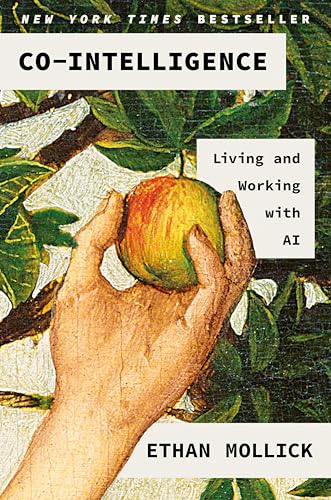
Co-Intelligence: Living and Working with AI
A Wharton professor's practical guide to working alongside AI — how to use it well, where it falls short, and what it means for your career.
💬 Probably the most useful AI book for non-technical people right now. Highly practical.
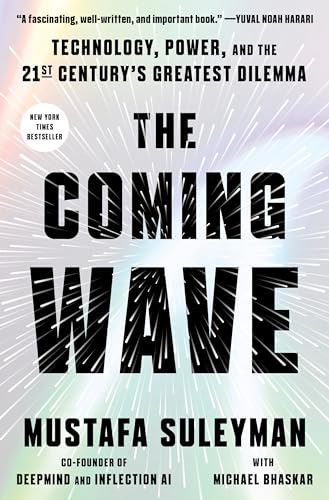
The Coming Wave
The co-founder of DeepMind explores how AI and synthetic biology will reshape civilization — and why containment is the defining challenge of our time.
💬 Sobering and fascinating in equal measure. Good for understanding the bigger picture.
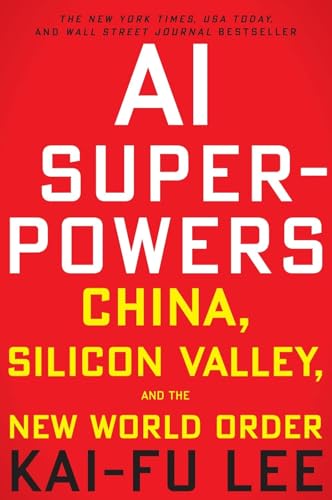
AI Superpowers
Former Google China president examines the AI race between the US and China, and what it means for jobs and the global economy.
💬 A bit dated now but the geopolitical framing is still very relevant.
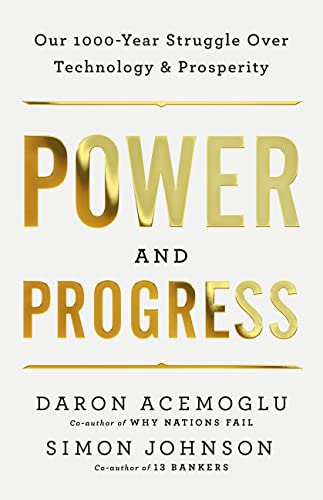
Power and Progress
Two MIT economists argue that technology doesn't automatically create prosperity — and that we need to make deliberate choices about how AI benefits everyone.
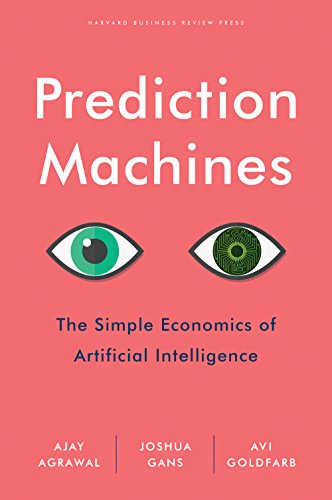
Prediction Machines
Three economists reframe AI as a "prediction machine" — dramatically cheaper predictions — and show what that means for business strategy.
💬 The clearest business-focused framing of AI I've read. Short and dense in the best way.
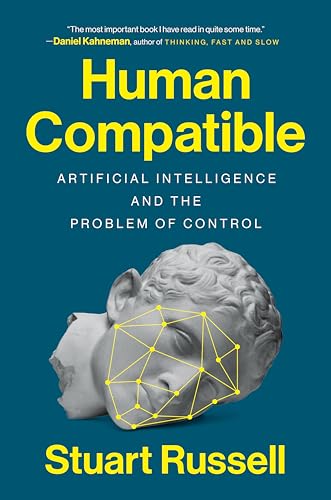
Human Compatible
A leading AI researcher makes the case that we need to rethink how we build AI from the ground up — focusing on machines that are genuinely aligned with human values.
As an Amazon Associate I earn from qualifying purchases.
Digital resources built by GrowScaleAI — no fluff, no theory, just clear roadmaps you can act on today.
Instant Download · PDFMost people are using AI wrong. This bundle shows you exactly how the top 1% use it — and how to build real income doing the same.
12 chapters from beginner to expert. Learn to write prompts that work, build AI workflows, and save hours every week.
10 proven business models you can start today — content repurposing, prompt systems, lead generation, faceless brands, and more.
Skill mapping + top 10 highest ROI opportunities ranked.
Included with Simple AI for Beginners — $97
Get the course →Your roadmap for getting the most out of the course — what's inside, how the modules connect, and 5 tips to get to value fast.
One page per module — key concepts, the top 5 copy-paste prompts, common mistakes, and a pro tip. Keep it open while you work.
20 fill-in-the-bracket prompts across email, reporting, research, automation, and strategy. Replace the brackets and go.
Exactly how each module applies to your role — Admin, Marketing, Sales, Leadership, HR, Finance. Real examples, not generic advice.
A shareable credential confirming practical AI proficiency. Add it to your LinkedIn under Licenses & Certifications once you finish.
Join the newsletter to be notified when new products drop
The skills AI cannot replace
Emotional Intelligence
The ability to feel, read, and respond to other people
AI can simulate empathy but it cannot feel. The ability to genuinely understand what another person is experiencing — and respond in a way that makes them feel seen — is one of the most powerful and irreplaceable human capacities. In a world increasingly mediated by screens and algorithms, it becomes more valuable, not less.
Critical Thinking
The ability to question, analyse, and form independent judgment
AI generates answers at speed. But it cannot question its own assumptions or know when the question itself is wrong. The human who can step back, challenge the premise, and think independently — not just consume information but interrogate it — will always have an edge over the person who outsources their thinking entirely.
Human Presence
The power of being physically, fully there
There are moments — a hand on a shoulder, eye contact across a table, sitting with someone in silence — that no screen can replicate. As the world digitises, physical presence becomes rarer and therefore more powerful. The leaders, caregivers, educators, and community builders who show up in person will carry an influence no AI can match.
Creative Vision
The ability to imagine what doesn't exist yet
AI remixes what already exists. It is trained on the past. The human imagination — the ability to envision something that has never been, to feel pulled toward a future that isn't here yet — is the engine of all real innovation. AI can execute your vision brilliantly. It cannot have the vision in the first place.
Moral Courage
The willingness to do what is right when it is hard
AI has no conscience. It does not know fear, and therefore it cannot know courage. The human who speaks truth when it costs something, who acts with integrity under pressure, who chooses people over profit when it matters — that is a quality that cannot be programmed. In an age of AI-generated everything, moral clarity is a competitive advantage.
Community & Trust
The ability to build belonging and earn belief
People follow people, not platforms. Trust is built through consistency, vulnerability, and shared experience over time — things an algorithm cannot manufacture. The person who can gather people around a shared purpose, hold them together through difficulty, and make them feel they belong to something real — that is power no AI can replicate.
"The most important skills of the next decade are not technical. They are deeply, irreducibly human. Invest in them accordingly."
— GrowScaleAI
The honest conversation nobody is having
Everyone says "learn AI or get left behind." But nobody is answering the real question — learn AI to do what, exactly? If the technology keeps improving faster than people can retrain, we need a bigger conversation. Not about tools. About people.
What's actually happening
The jobs being displaced are not coming back
Data entry, basic copywriting, customer service, paralegal research, basic accounting, medical imaging analysis — these are not changing, they are ending. The honest answer is that some jobs are gone. Not evolving. Gone. Understanding which ones and why is the first step to navigating what comes next.
What's being created
New categories of work that didn't exist five years ago
AI prompt engineers, human oversight specialists, AI ethics officers, synthetic media directors, automation architects. Every technological revolution creates new roles — but they require access, education, and time to develop. The gap between what disappears and what replaces it is where the real crisis lives, and where the real opportunity is.
Who gets left behind
The communities with the least access to the tools that matter most
AI amplifies existing inequality as much as it disrupts it. The people with broadband, education, and capital will benefit first and most. Communities already underserved — by geography, by race, by income — face a compounding disadvantage. This is not inevitable. But it requires deliberate, urgent intervention. Not charity. Infrastructure.
The skills that survive
Not the most technical — the most human
The jobs that endure are the ones we undervalued all along — caregivers, tradespeople, teachers, community leaders, counsellors. And the professionals who survive in disrupted fields will be the ones who combine domain expertise with emotional intelligence, judgment, and trust. The question is not "can AI do this?" It is "can AI do this AND be trusted to do this?" Usually the answer is no.
Explore: Human Skills — our full guide ↗
The amplification model
AI as a multiplier of what you already bring
The most resilient workers and entrepreneurs of the next decade will not be those who replaced themselves with AI. They will be the ones who used AI to do in one hour what used to take ten — and spent the other nine hours on the work only they could do. Judgment. Relationships. Vision. Strategy. That is the amplification model. That is why GrowScaleAI exists.
Explore: Browse our AI tools directory ↗
The solution nobody wants to say out loud
We need to value human connection as much as human output
We built an economy that values productivity above almost everything else. AI is exposing the fragility of that. A caregiver, a teacher, a community builder — these have always been among the most important people in any society. We just never paid them like it. The future of work is not just a technology question. It is a values question. And the answer starts with us.
"The question is not whether AI will change the world of work. It already has. The question is whether we will shape that change — or simply survive it."
— GrowScaleAI
Tools We Recommend
The best AI tools, hand-picked.
Every tool below is one the GrowScaleAI team has evaluated. Affiliate links help keep this hub free — you pay nothing extra.
AI writing platform built for marketing teams — generate on-brand blog posts, ad copy, emails, and social content at scale.
Try Jasper Free →The world's most-used design platform, now supercharged with AI — generate images, remove backgrounds, and design like a pro in minutes.
Try Canva Pro Free →AI-powered GTM platform that automates sales sequences, outbound emails, and marketing workflows — from first touch to closed deal.
Start Free with Copy.ai →Write and optimise articles that rank — Surfer analyses top-ranking pages and tells you exactly what your content needs to outperform them.
Try Surfer SEO →The gold standard for AI image generation — create stunning, photorealistic or stylised visuals from a text prompt in seconds.
Explore Midjourney →Create professional AI videos with a digital avatar of yourself — ideal for sales, training, and content at scale without ever picking up a camera.
Create Your Avatar →Build powerful, multi-step automations with a visual drag-and-drop editor — connect 1,500+ apps and run complex workflows without code.
Start Automating Free →Your entire workspace with AI baked in — draft docs, summarise notes, manage projects, and build wikis, all in one connected platform.
Try Notion AI →★ Affiliate disclosure: links above may earn GrowScaleAI a commission at no cost to you. We only feature tools we have personally evaluated and genuinely recommend.
Affiliate Disclosure: Some links are affiliate links — we may earn a small commission at no extra cost to you. We only recommend tools we genuinely believe in. · Disclaimer: Not affiliated with Meta, Google, or any other company mentioned. All product names and brands are property of their respective owners. ·
- Unlimited Workflow Builder — turn any goal into a step-by-step AI-augmented process
- Make & Zapier Blueprint — ready-to-build automation template for every workflow
- Printable PDF output — keep your blueprint as a reference
- All future Advisor modes as they're added